The Charging Cord Has to Reach the Truck
One Minute Charge #05
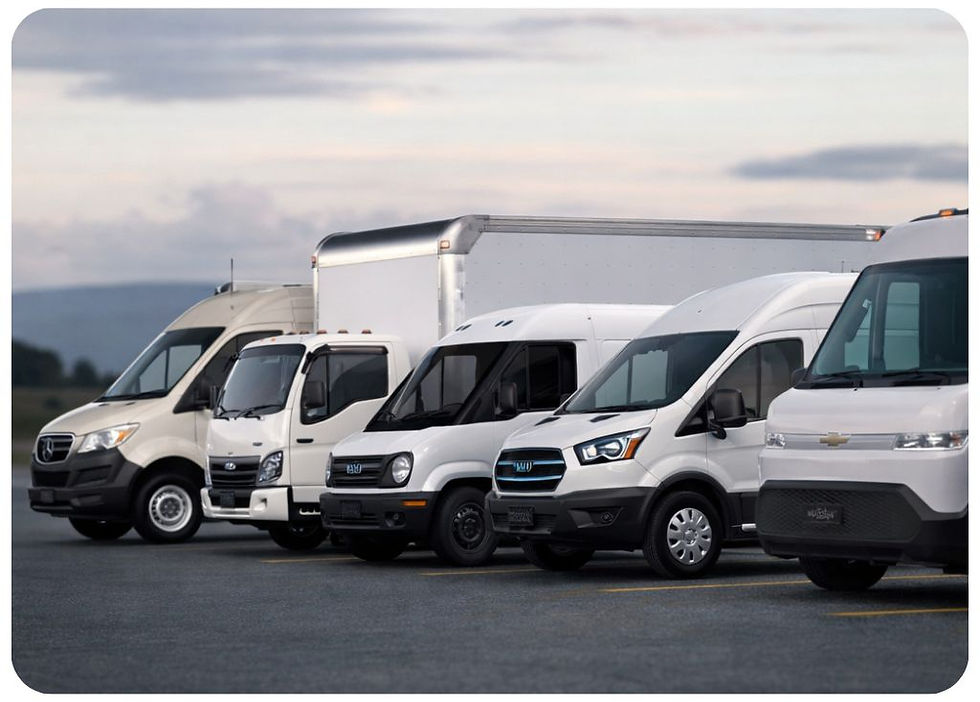
Charging only works if the vehicle can actually connect
It sounds obvious: the cord has to reach the truck.
But this is one of those details that shows up in unexpected ways and causes more problems than most people would expect.
Most public charging infrastructure was designed for passenger vehicles. As we noted in the previous article, even the parking spaces often don’t fit trucks. The same is true for charging cords.
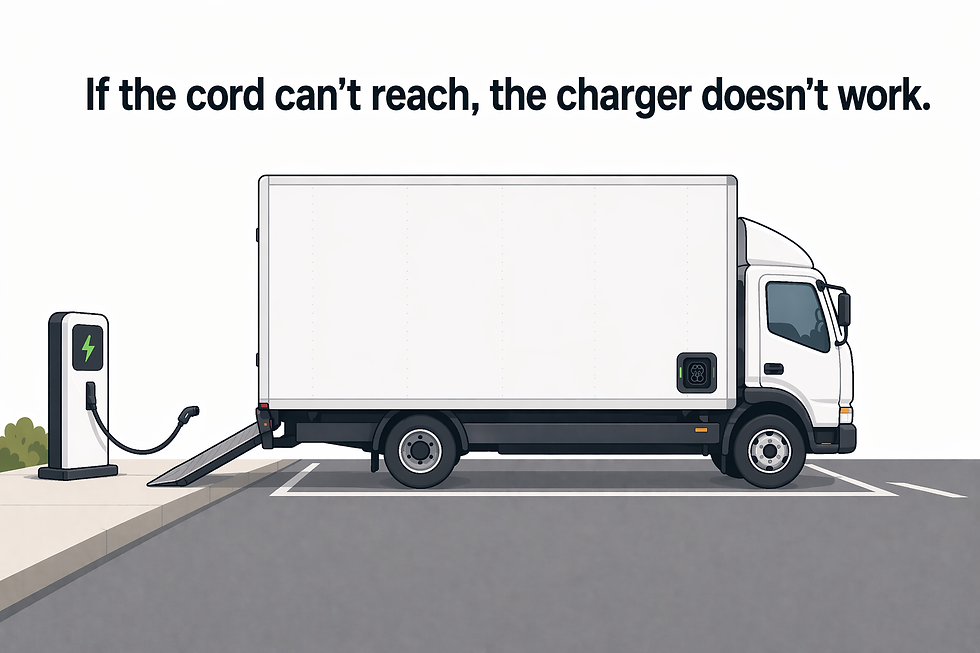
There’s also a practical constraint: cord length is typically limited to about 25 feet. That’s usually enough for a sedan. It’s often not enough for a commercial truck.
Truck length, parking position, and charge port placement all matter. A 20-foot vehicle can still be too far away if the charge port ends up on the wrong side or corner.
With gasoline vehicles, this wasn’t much of an issue. Trucks pull through fueling lanes, and drivers can position the vehicle however they want. The fuel nozzle reaches easily, regardless of where the tank is.
Charging works differently. Most charging happens in parking spaces, where vehicles are expected to stay in place for extended periods. That limits how much you can adjust positioning to make the cord reach. Many chargers also have two cords for two vehicles, so you end up with one truck plugged in… and the other a few feet short.
That’s where design decisions start to matter. Many vehicle manufacturers don’t build charging infrastructure—and historically haven’t had to think about how their vehicles connect to chargers in the real world. As a result, charge port placement and parking layout can create unexpected constraints.
For fleets, this becomes an operational issue quickly. Because when it comes to charging, it’s not enough to have the right vehicle or the right charger.
If the cord can’t reach, the charger might as well not exist.