Charging Gets Cheaper the More You Use It
Updated: Mar 23
One Minute Charge #01

Why charger utilization drives the economics of electrification
Charging infrastructure has a simple economic reality: most of its cost is fixed.
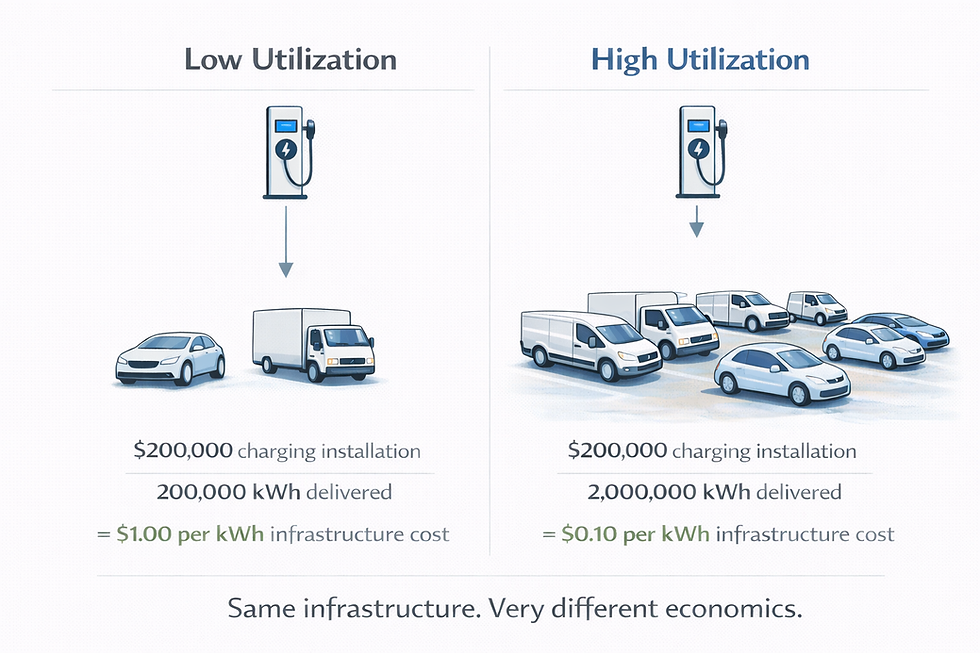
The equipment, installation, permitting, and electrical upgrades all happen before the first kilowatt-hour (kWh) is delivered. Whether a charger dispenses a little electricity or a lot, those upfront costs are largely the same. What changes is how much work the charger does.
When a charger serves more vehicles, or operates for more hours each day, its fixed costs are spread across more energy delivered. The cost per kWh falls. When a charger sits idle much of the time, those same costs are spread across far fewer kWh, making each unit of energy effectively more expensive.
The same logic applies to emissions reduction. Every additional kWh dispensed replaces gasoline or diesel that would otherwise be burned. A charger that delivers more energy displaces more fossil fuel.
In other words, the value of charging infrastructure isn’t measured by how many chargers are installed. It’s measured by how much energy they deliver.
Because in the end, charging gets cheaper—and more impactful—the more it is used.